 Area LocksmithLas Vegas
Commercial Door Closers in Las Vegas
Adjustment · Repair · Replacement
Doors that slam, drag, or drift open all trace back to one device. We adjust it, and when it's done, we replace it with the right size.
The door closer is the hardest-working device on a commercial door and the least noticed — until it fails. A slamming door chews through latches, cracks glass and startles customers; a weak one leaves the door standing open to the desert heat and anyone walking by. Most "door problems" we're called for end at the closer.
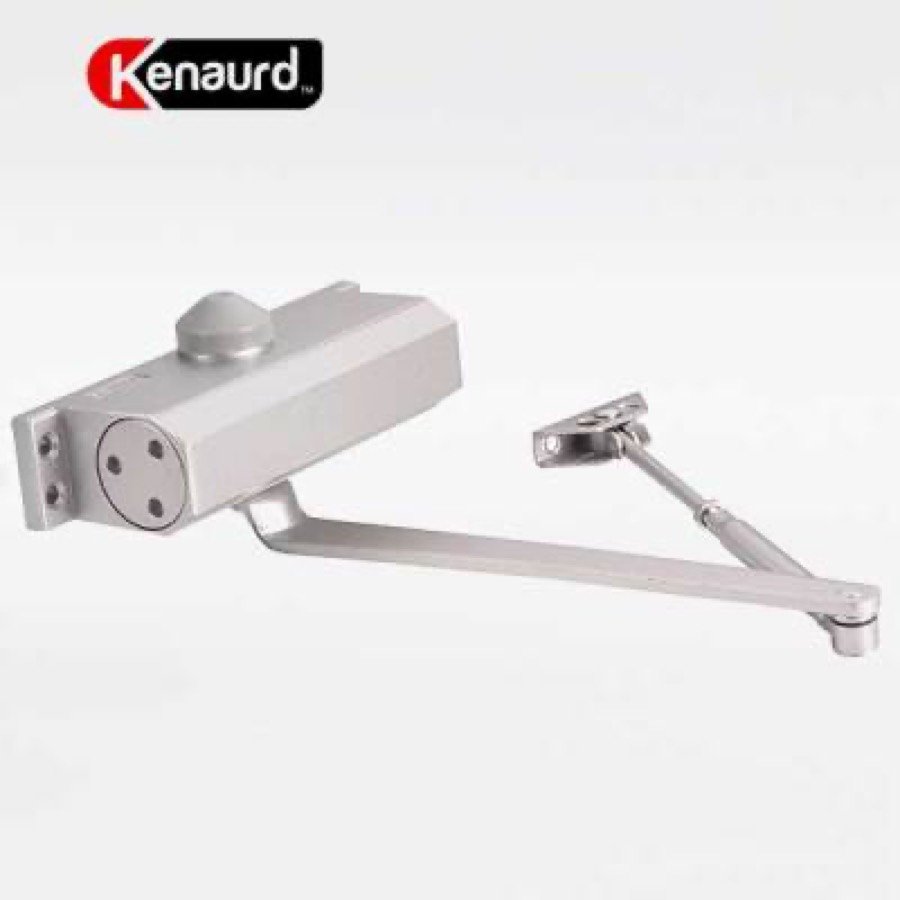
Symptoms that point to the closer
- Slamming — latch-speed valve failed or closer undersized for the door
- Closing too slowly — sweep valve drifted or spring power set too low
- Oil streaks on the door — blown seals; the closer is finished
- Door drifts open — no back-pressure left to overcome the latch
- Arm flopping loose — stripped pinion or sheared arm screws
Adjust First, Replace When It's Earned
Every hydraulic closer has adjustable sweep, latch and backcheck valves, and many door complaints disappear with fifteen minutes of proper valve work — a service call, not a hardware bill. When the internals are worn or leaking, we size the replacement to the door's width, weight and exposure rather than matching whatever was there: the previous closer was often wrong from day one, which is why it died early.
Closer Types We Install
- Surface-mounted hydraulic closers — the workhorse on offices, shops and back doors
- Heavy-duty closers — for wide, heavy or wind-exposed doors that destroy standard units
- Concealed & floor closers — hidden in the header or floor for clean storefront lines
- Hold-open and stop arms — where propping is wanted legally (never on fire doors)
Frequently Asked Questions
Why is my door closer leaking oil?
The hydraulic seals have failed. A leaking closer can't control the door and will slam; seals can't be rebuilt in the field, so replacement is the fix.
Can you adjust a door that slams or closes too slowly?
Yes — sweep, latch and backcheck valves are all adjustable. If an adjustment won't hold, the closer is worn inside and we'll size a correct replacement.
Do you install concealed closers?
Yes — overhead-concealed and floor closers, common in storefronts and offices where an exposed arm isn't wanted.
Related Commercial Services
Stop the Slamming
One visit: valves set, worn units identified, and a straight answer on what's worth replacing.